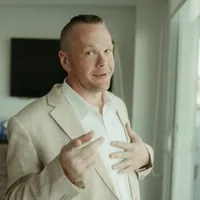
John Kral
Chief People Officer
Green Garden Child Development Center
Curiosity: Reshaping HR for a World of Non-Linear Careers
Thesis
“Careers are non-linear, and while titles change, people remain at the core; effective leadership in HR requires a posture of curiosity, deep listening, and applying organizational values consistently to both customers and employees to drive positive change and foster growth.”
What you'll take away
- 01Always approach situations with a posture of curiosity; don't just accept initial information or narratives, but investigate different perspectives.
- 02Shift the perception of HR from 'rules enforcers' or 'gatekeepers' to a supportive function focused on the health and wellness of the entire organization.
- 03Align internal leadership practices with the core values you promote for your customers; treat employees with the same principles you apply to clients.
- 04For leaders (especially CEOs), bring people leaders into strategic discussions early to understand how policies and vision will be interpreted and received by employees.
- 05Realize that change begins with a leader's posture of listening and empathy, rather than solely with new policies or gadgets.


What most organizations get wrong
- Challenges the traditional, often negative, perception of HR as merely enforcers: 'Instead of being somebody to look to and to find support in, it was the gatekeepers. It was the ones that holding people accountable and not in a positive way, but in a way to bring shame, to find blame.'
- Reverses the conventional wisdom that organizational change is primarily driven by formal rules or procedures: 'Change doesn't start with policy, it starts with posture.'
- Challenges the idea of leadership as simply recruiting top talent, emphasizing development and inspiration instead: 'leadership isn't about finding the right group of people and who are, have already arrived. And just assembling them together, right? It's about actually getting together those people that have the same passions and enthusiasms that you do and inspiring them towards growth to go from here to there.'
In John's words
“what I learned is while titles change, people are still people. And so my journey has been definitely not linear and not normal, but it's been an opportunity to connect with and to love and to build up people into different avenues and different venues.”
This quote encapsulates his core philosophy about the enduring importance of human connection and care, regardless of professional role or career path.
“I realized that what my leader told me, it wasn't that he was wrong, it was just he didn't have the full picture and the full story. And so what I learned from that very early on experience was that I needed to do some investigating on my own. I needed to be curious, right?”
Highlights the critical importance of curiosity and independent inquiry for leaders to understand the true dynamics of a situation.
“we shifted what HR was from the rules enforcers to the people that were really a part of the team to just bring about health and wellness for the entire organization.”
Illustrates a successful transformation of HR's role and perception within a rapidly growing company.
“I found myself often with our leaders saying, hey, if this staff member was a 3-year-old in your classroom, what would you do? And they'd go, oh, I wouldn't do it that way. So what should we do? Let's carry that value now that we have in our product or our service into leading our people because it's who we are.”
This provides a vivid and relatable example of how to bridge the gap between customer values and internal employee leadership.
“That change doesn't start with policy, it starts with posture.”
A concise and powerful statement that challenges conventional approaches to organizational change by prioritizing leadership mindset over formal rules.
The problems this episode addresses
- Leaders making decisions based on incomplete information or a single perspective, leading to alienated employees.
- HR departments being viewed negatively as 'gatekeepers' or 'rules enforcers' rather than supportive partners.
- Inconsistency between an organization's stated values for customers and its internal treatment and leadership of employees.
- Visionary leaders (CEOs) developing policies without input from people leaders, resulting in misinterpretation and ineffective implementation.
In this episode
Built by People podcast features insights from world's top HR leaders
Built by People
John Miller shares a little bit more about his career journey
John Hewitt on His Career Journey
You worked on a challenging project that required you to adapt your strategies
Challenging Projects in Your Career
Greengarten has gone through explosive growth over the last few years
When Change Is Needed in an Organization
One of the things that I learned listening to our team was that we have incredible values
The Center for Innovation and Transformation
John, what parting advice would you like to share with our community
John Haslam on Built by People
Topics covered
Organizations and entities mentioned
Full transcript
Expand transcript (0 words)
Transcript is not available yet.